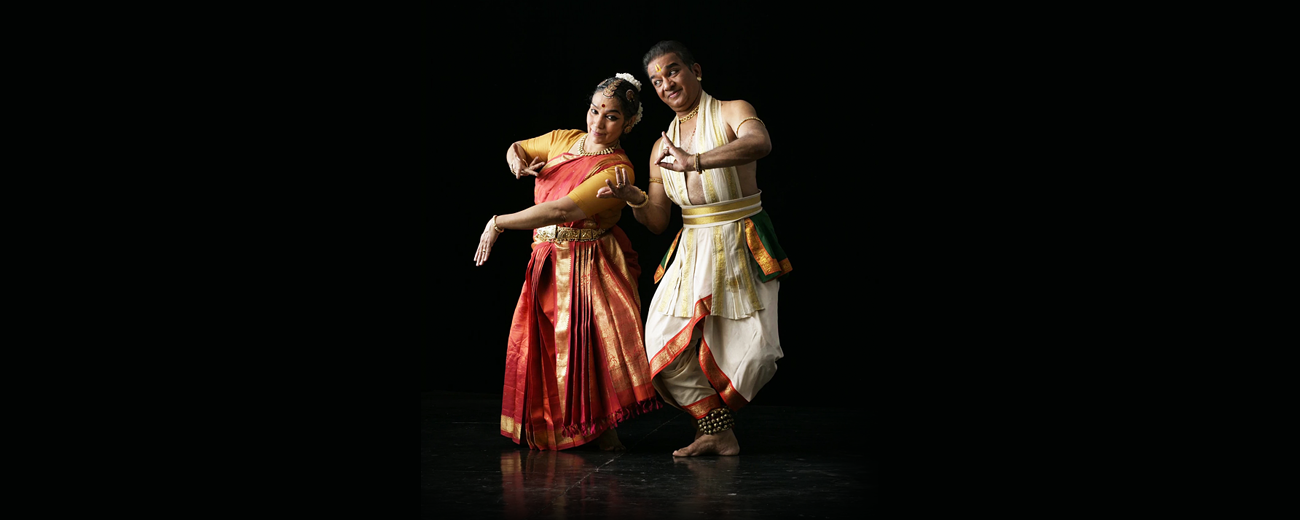

Dhananjayan
was born on 30th April 1939 in Payyanur, Kerala, historically a very important
village in Kerala. This village has a long standing cultural heritage of
Ayurveda (Indian medicine), Kalarippayattu (Martial arts), Kathakali (the
classical dance theatre) and Theiyyam (a ritualistic folk art form).
To know more
about this village and it's importance, visit www.payyanur.com
One of eight
children of a not well-to-do schoolmaster, he however had a flair for poetry
and Sanskrit dramas. No
one in Dhananjayan's family had ever danced professionally, but his father
had staged amateur dramatic performances, based largely on mythological
themes, with a makeshift troupe he had gathered primarily from among his
relatives. Dhananjayan has acted in his father’s plays, and grew up seeing
his father and other kin travel from village to village during school vacations,
performing as they went. As a youth, Dhananjayan, watched but did not train
with the two Kathakali troupes located in Payyanur- Kodoth Kathakali Sangam,
a 150 year old organization sponsored by a big landlord, and Thazhakaatumana,
a troupe owned by a big Kerala Namboodiri family.
While teaching
in Kalakshetra in the 1950’s, Chandu Panicker was assigned by Rukmini Devi,
the responsibility of finding young male dancers willing to come to Kalakshetra
to learn Kathakali and Bharatanaatyam. In 1953, when Dhananjayan’s father
happened to meet Chandu Panicker in a train compartment, he expressed the
difficulty of feeding such a large family on his meager schoolteacher’s
salary and offered one of his sons to Chandu Panicker. Dhananjayan had
taken a particular interest in Sanskrit literature during his primary school
days and had been writing poetry from the age of 8. Seeing a unique sparkle
in Dhananjayan and a propensity for creative ideas, his father decided
purely on instinct to choose him out of 4 sons to send to Kalakshetra.
Even though
Chandu Panicker had already selected Balagopal from the same village, he
called for Dhananjayan a couple of days later. A week later, Dhananjayan
was on his way to Kalakshetra where he spent the next 15 years of his life.
Dhananjayan’s father had requested that if his 14-year-old son did not
meet with Rukmini Devi’s qualifications, to send him back. Fortunately,
not only was he accepted, he was also given a scholarship to study at Kalakshetra
where the rigors of his education and way of life prepared him to meet
the challenges of life as a dancer later on. Initially, his dance training
and education in Kalakshetra was the only contact with the outside world.
Much of his inspirations, dedication and attitude to life were fashioned
here.
“In many
ways, I am the person I am because of that institution” |